Tutorial #1, Monday 6 July, 9:15 – 10:30: « Particle interaction with matter », by Alessandra Tonazzo
Alessandra Tonazzo has been working on experimental neutrino physics for about 20 years. She participated to major experiments such as Double Chooz, to design studies EUROnu and LAGUNA-LBNO, and is a long-term contributor to of the Deep Underground Neutrino Experiment, DUNE. She was also involved in direct searches for dark matter with DarkSide and in interdisciplinary studies of muon tomography applied to geoscience and archeology.
She is Full Professor at Université Paris Cité, where she chairs the Scientific Council of the Physics Department and coordinated the local Doctoral School. Her lectures are mainly on fundamental physics, nuclear and particle physics, particle detectors.
Abstract:
This introductory lecture will provide an overview of the fundamental mechanisms governing the interaction of particles with matter and discuss the basic operating principles of particle detectors. The lecture will outline the operating concepts of detector systems, with particular emphasis on photon detection, and will highlight selected applications related to the scientific program of the conference.
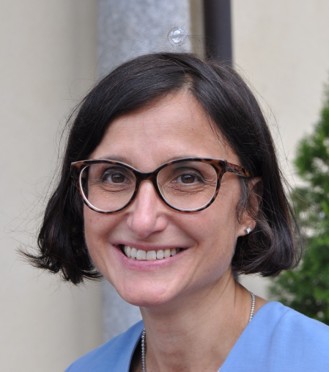
Tutorial #2, Tuesday 7 July, 8:00 – 9:15: « Silicon Detectors: Device Types and Application », by Jelena Ninkovic
Jelena Ninkovic is Head of the Semiconductor Laboratory of the Max Planck Society. She has been working on silicon detector technologies and semiconductor devices since 2005. She studied physics at the University of Belgrade and obtained her PhD from the Technical University of Munich (TUM).
Her research activities span a broad range of semiconductor detector technologies, from sensor development and device characterization to detector integration and large-scale detector production. At the Semiconductor Laboratory, she is involved in the development of advanced silicon detectors and semiconductor devices for applications in particle physics, astrophysics, and photon science. Her work focuses on low-noise detector systems, excellent spectroscopic performance, radiation hardness, and high-precision particle physics tracking. This includes technologies such as Silicon Drift Detectors (SDDs), DEPFET sensors, pnCCDs, strip and pixel detectors, as well as fast timing devices such as LGADs. Through these activities, she contributes to international research collaborations and next-generation detector systems across multiple scientific fields.
Abstract:
This tutorial will provide an overview of silicon detector technologies used in modern scientific instrumentation. After a short introduction to the operating principles of semiconductor detectors, the tutorial will focus on the main silicon device types, including pad and strip detectors, Silicon Drift Detectors (SDDs), pnCCDs, DEPFET sensors, and fast timing detectors such as LGADs, together with their typical applications, operational principles, advantages, and limitations.
Tutorial #3, Wednesday 8 July, 8:00 – 9:15: « Medical physics instrumentation », by Gabriela Llosa
Gabriela Llosá is a researcher at IFIC (CSIC-UV, Valencia, Spain) with an internationally recognized expertise in detector development. She started her career in particle physics experiments to specialize in medical imaging. Her fields of expertise include PET, SPECT and Compton cameras for diagnostic and therapy monitoring. She is currently involved mainly in the development of Compton cameras for targeted radionuclide therapy assessment.
She has participated in a high number of international projects and collaborations and she has led four National Spanish projects and several regional and technology transfer projects. She is currently the coordinator of the European collaborative project AIDER. Regarding the training of young researchers, she has supervised eight PhD theses and almost thirty research works and she has collaborated for many years in the Masters of medical physics and of advanced physics of the University of Valencia.
Abstract:
Medical imaging instrumentation continues its development to achieve better performance with lower dose and reduced cost. Diagnostic imaging modalities profit from the latest advances in detector response. Treatment monitoring in advanced therapies such as protontherapy or targeted radionuclide therapy imposes additional challenges to the imaging systems that require improved detector performance. The latest detector advances in the field as well as the most active areas of research will be covered.
Tutorial #4, Thursday 9 July, 8:00 – 9:15: « Toward the AI-powered Co-design of Future Experiments in Fundamental Physics », by Tommaso Dorigo
Tommaso Dorigo is an experimental particle physicist who works for the INFN in Padova. In the past 10 years Dorigo has directed his attention to the use of AI techniques for fundamental science, founding the MODE Collaboration for that purpose. He presently is a RECAT guest Professor at Lulea University of Technology, where he collaborates with computer scientists on neuromorphic computing applications to particle detector development. With LTU Dorigo participates in the EIC-PATHFINDER winning project « PHINDER », which will use nanophotonics and neuromorphic computing for ultrafast, ultra-energy-efficient preprocessing of light signals from calorimeters and other devices.
Abstract (given remotly):
In 2012 a true revolution took place as deep neural networks surpassed humans in image classification tasks. The same year marks a transition in fundamental physics, as for the first time a discovery was enabled by machine learning techniques. A new revolution is about to take place as new AI tools are now enabling the end-to-end optimization of full experiments, including hardware, software, and their interplay.
In this lecture we will discuss the problem of optimizing the design of experiments in fundamental physics, using AI techniques. We will look in detail at a few recent examples of medium complexity, to illustrate the problems faced with these holistic optimization techniques, and their potential.